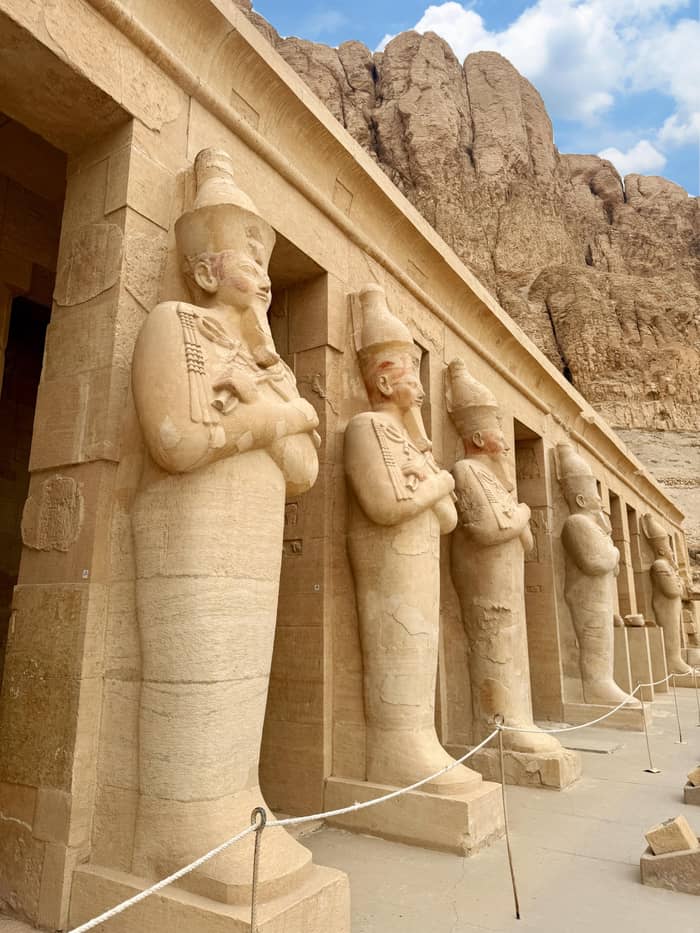
The day sold here
A private day by plane
From Cairo and back
- Length15 hours
- Reviews791 at 4.49
- From$436
Tap-to-check list
Checklist · 9 tasks
Tap to check items off; your progress is remembered on this device.
0 / 9 ready
All done. Only your date and your flight details are left to choose.
Claim a spotA plain answer to what Luxor is, how its two banks divide the sights, what the official advice says about safety, and what to carry when the sun is high.
Editorial team, luxorbyplane.com · Updated November 24, 2026 · Reading: 7 min
Key facts
Luxor is a city in the south of Egypt, built over the ruins of ancient Thebes, which the Ministry of Tourism and Antiquities describes as one of the most important cities of the country from the Middle Kingdom onwards.1 That is the answer to what is Luxor in a single line: a working town on the Nile that also holds the densest cluster of ancient temples and tombs in the land. The Ministry dates the Middle Kingdom from 2055 BC to 1650 BC,6 and most of what visitors walk through today was added later, in the New Kingdom of about 1550 to 1069 BC.7
The river separates two halves of the city, an East Bank and a West Bank, and the ancient Egyptians gave each half a different purpose.2 The national tourism site sums it up as a ferry ride from the land of the living on the east to the holy burial grounds on the west.8 The Ministry explains the west this way: the sun god went down in the west before his rebirth in the east, which tied that side to burial and put the cemeteries there.9 The living city and its great cult temples stayed on the east side.
In the Ministry's World Heritage entry the east bank holds Karnak and Luxor Temple, while the west bank holds Medinet Habu, the Ramesseum, Hatshepsut's temple, the Colossi of Memnon, the Valley of the Kings, the Valley of the Queens, plus the settlement and burial places of the royal workmen at Deir al-Medina.10,11 Egypt's national tourism site, Experience Egypt, labels Luxor the open-air museum of the country.12 The Ministry uses almost the same words for Karnak alone, a veritable open-air museum in its own right,13 so a visitor should treat the city as a set of sites to choose between and not as one attraction.
The main sites
| Site | Bank | Open | Foreign adult ticket |
|---|---|---|---|
| Karnak | East | 06:00 AM to 05:00 PM30 | EGP 60031 |
| Luxor Temple | East | 06:00 AM to 08:00 PM32 | EGP 50033 |
| Valley of the Kings | West | 06:00 AM to 05:00 PM34 | EGP 75035 |
| Hatshepsut Temple | West | 06:00 AM to 05:00 PM36 | EGP 44037 |
| Medinet Habu | West | 06:00 AM to 05:00 PM38 | EGP 23039 |
| Ramesseum | West | 06:00 AM to 05:00 PM40 | EGP 22041 |
Prices follow the Ministry's temple pages; a second Ministry page for Deir al-Bahari gives EGP 360, so confirm the figure before travelling.42
People who type how big is Luxor usually want to know how much ground a visit covers, and the answer is spread over two banks. On the east side the two great temples stand around 3 kilometers apart,20 and the Sphinx Avenue that joins them is around 2,700 meters long.21 The Ministry began a project to restore that avenue in 2017,19 and the tourism site now lists the reopened walkway among its insider picks for the city.22
Karnak is large in its own right. Karnak breaks into precincts: the one for Amun is the biggest, Mut's lies south of it and Montu's north of it,23 and in the biggest one the Great Hypostyle Hall holds 134 columns standing like a forest.24 A day visitor therefore cannot expect to read every wall: the immersive flight-day listing allows Karnak 1 hour, while the road day from Hurghada allows 65 minutes. The east bank page of this site shows what that time can hold, and the west bank page does the same for the tombs.
Across the river the west bank sites are scattered along the cliffs rather than grouped. Hatshepsut's temple faces Karnak from the far side of the river,25 and the Valley of the Kings lies over the hills behind it.26 That valley alone counts over 60 tombs, plus 20 more that were never finished,27 and it is organised as two valleys, East and West, of which the eastern is the famous one.28
Heat through the year
So is Luxor safe for a visitor? No source can promise that, but the official advice gives a usable picture. The British foreign office warns against all but essential travel in the desert west of the Nile Valley, yet it exempts Luxor and Qina along with Aswan, Abu Simbel and the Valley of the Kings.4 It notes additional security at tourist sites45 and describes crime in Egypt as generally low, though it still wants the normal sensible care.46
The same advice does not hide the risk side. It warns that a terrorist attack could strike without distinction, and that includes places foreign visitors frequent,47 so reading the current travel advice before the trip is part of the preparation and not an optional extra. It also calls pickpocketing rare,48 warns that touts and scammers sometimes pick on foreign visitors around tourist sights,49 and notes that police regularly ask to see ID, so the passport should travel with you.50
Two numbers are worth saving in a phone before the flight. The UK government gives 126 for the tourist police,51 and the tourism site lists the same number,52 while the ambulance number is 123.53 The advice also asks visitors to hold travel insurance that covers local treatment or unexpected medical evacuation.54 A guided day with a licensed operator removes most of the day to day friction, because the guide handles the ticket queues and the drivers.
Pick your focus
Tell us your priority and read where to begin.
If I want the great temples
Start on the east bank
Karnak and Luxor Temple stand on the east bank, around 3 kilometers apart.43,20
If I want the royal tombs
Cross to the west bank
The Valley of the Kings lies across the river from ancient Thebes.44
If I want shade and an early start
Go when the gates open
Karnak and the other big sites unlock at 06:00 AM, well before the hottest hours.30
If I want the evening light
Finish at Luxor Temple
Luxor Temple closes at 08:00 PM, after the other sites have shut.32
If I worry about safety
Read the current advice first
The UK government lists Luxor as an exception to its Western Desert warning and notes extra measures at tourist sites.4,45
Ways to see it
The day sold here
From Cairo and back
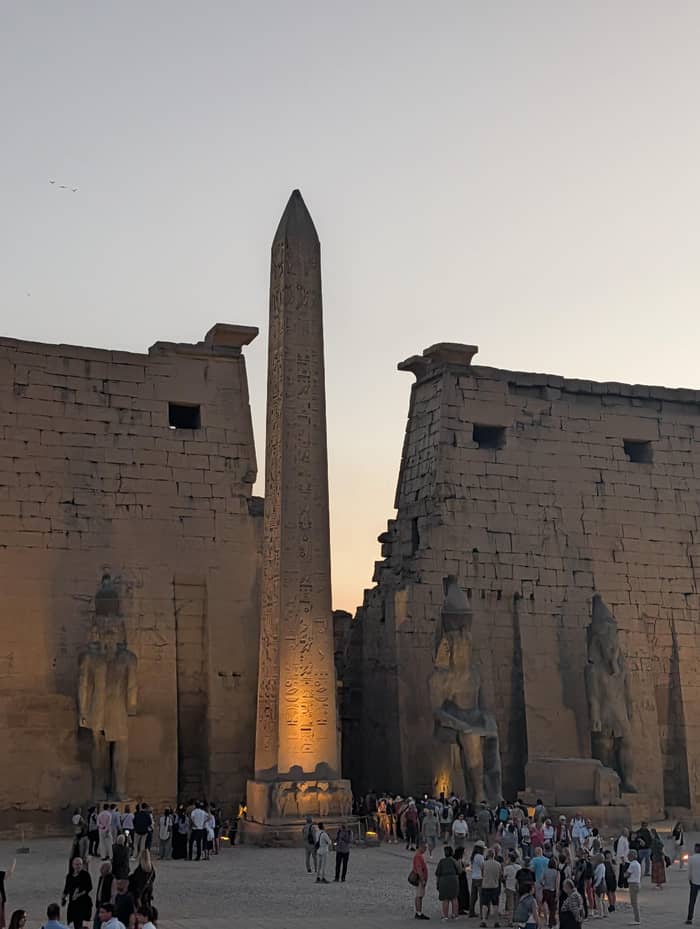
A night in Luxor
Two days, a night between
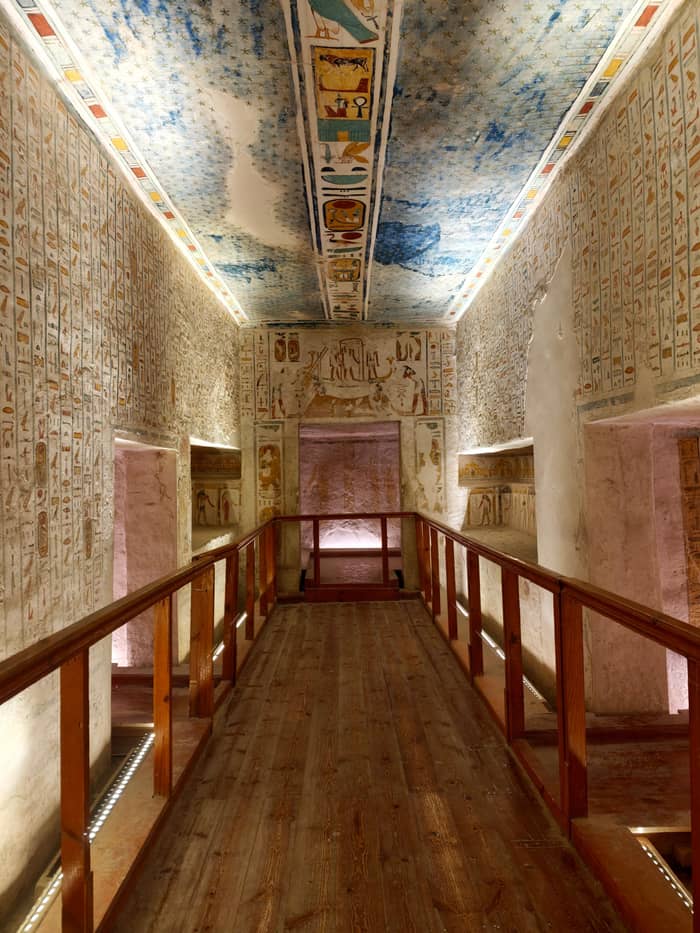
From Hurghada
By small group bus
Heat defines most of the Luxor year, and the record shows how much. NOAA's closest station, 56.7 km out and temperature-only, puts average highs at 40.8 degrees in June, 40.7 in July and 40.6 in August, against 22.2 in January.29,29,29,29 The tourism site calls November to March the moderate winter and May to September the hot, dry summer,58 so a visitor with a free choice of month should lean to the cooler end of the year.
The sites open early, and that is the best defence against the sun. Karnak, the Valley of the Kings and Hatshepsut's temple keep the same daily hours, opening at 06:00 AM and closing at 05:00 PM, the Ministry says,30,34,36 and Luxor Temple alone keeps going until 08:00 PM.32 Closing later than the rest, it suits the last slot of a long day. The tourism site's packing advice is sunscreen, a hat and sunglasses, plus a scarf or light cardigan to cover arms and legs at certain sites.5
Dress is about respect as well as sun. British advice asks for modest clothing, above all in rural areas, mosques and markets,56 and says that during Ramadan eating, drinking or smoking in public by day is culturally insensitive.59 A visitor on a day trip will meet this mostly at lunch, where the guide will know which restaurant is open. Cash matters as well: the tourism site describes Egypt as a cash-based society where taxis and small shops expect Egyptian money.55
Price a day here
Set the number of travellers to see the starting price of tours you can join once you are in the city.
Weigh up 3 options
Set the number of travellers to see the starting price of tours you can join once you are in the city.
≈
View≈
View≈
ViewThese from-prices come from GetYourGuide and are converted using the ECB reference rate; the exact price shows at checkout.
Through the ages
Middle Kingdom
The Ministry dates this period from 2055 BC to 1650 BC and says Thebes became one of the most prominent cities.6,1
Middle Kingdom
The earliest traces of Karnak Temple come from this age.14
New Kingdom
Most monuments that can still be visited were built from about 1550 to 1069 BC.7
New Kingdom
Thutmose I is the earliest ruler certain to have been laid to rest in the Valley of the Kings.15
Hatshepsut
A queen who ruled as pharaoh raised her temple at Deir al-Bahari, over on the western side.16
Later kings
Ramses II built the Ramesseum and Ramses III built the temple at Medinet Habu.17,18
Modern age
UNESCO put Ancient Thebes and its necropolis on the World Heritage List in 1979, as the Ministry records.3
Today
From 2017 the Ministry has worked to restore the Sphinx Avenue between Karnak and Luxor Temple.19
On the ground, the city runs on short rides. Luxor's taxi equivalent, says the tourism site, is the horse-drawn caleche, or hantour,60 and the ferry remains the classic way across the river from the east bank to the west.8 A private day tour removes both decisions, because the car and the guide take the sites in a fixed order, and the sold tour packs the west bank sites, a felucca cruise and the two big east bank temples into a day of 15 hours.
The cost side of the sites is set by the Ministry and quoted in Egyptian pounds on its pages. The foreign adult ticket for Karnak is EGP 600,31 for Luxor Temple EGP 50033 and for the Valley of the Kings EGP 750,35 and the title of the sold tour promises that entrance fees are covered. Fees change, so check the Ministry's page before you go. The tourism site allows personal photography at archaeological sites without a permit, but not flash photography indoors.57
Many visitors reach Luxor by air. Most destinations in Egypt, temples among them, lie within a domestic flight of 60 minutes, the tourism site says,61 and the sold tour spends 1 hour in the air each way between Cairo and Luxor. That is why a person based in Cairo can see the city in a single long day. Whether a day is enough, or whether a night or two serves better, is the subject of the how-many-days page, and the choice between the two banks is covered on the pages for the east and west bank.
Video
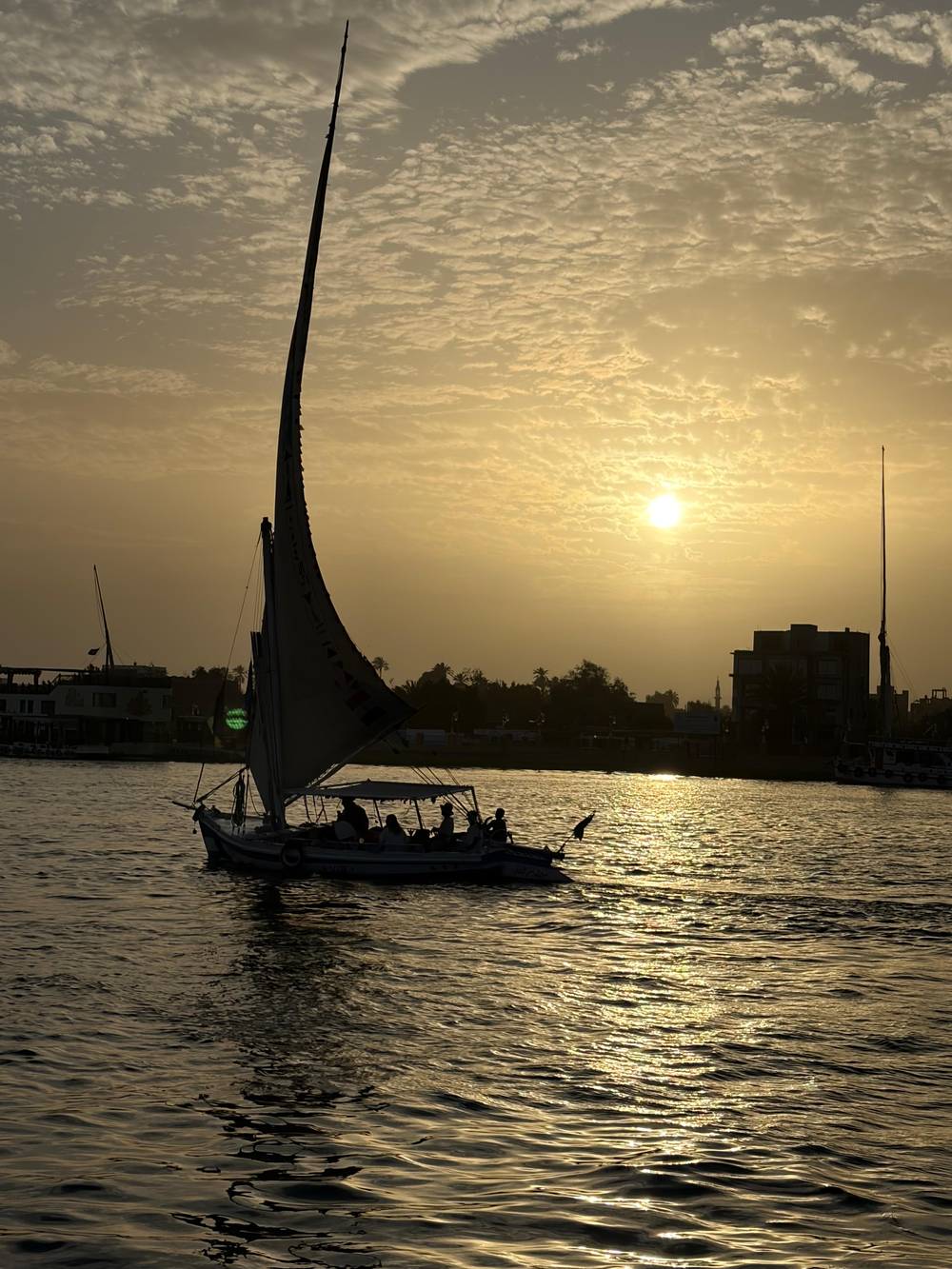
No Digas No Just Go on YouTube · Your tap on play is what loads the video.
Luxor, Egypt's open-air museum, holds the memories and chronicles of ancient Egyptian gods and royalty
FAQ
Luxor here is the city on the Nile in southern Egypt, on the site of ancient Thebes.1 The name is also borne by a hotel in the United States, which this site does not cover.
Karnak stands on the east bank of Thebes, which the Ministry equates with modern Luxor.43
New Kingdom rulers were laid in a dry valley on the far side of the river from ancient Thebes, according to the Ministry, hence the name Valley of the Kings.44
The tourism site allows personal photography at archaeological sites and museums but not flash photography indoors.57
The tourism site describes a ferry from the East Bank to the burial grounds of the West Bank.8
Sources
Planning Luxor in a day from Cairo? Ask a real person here.